Back-Hand Mehndi for Wedding Season 2026: Light, Photogenic & Bridal-Ready
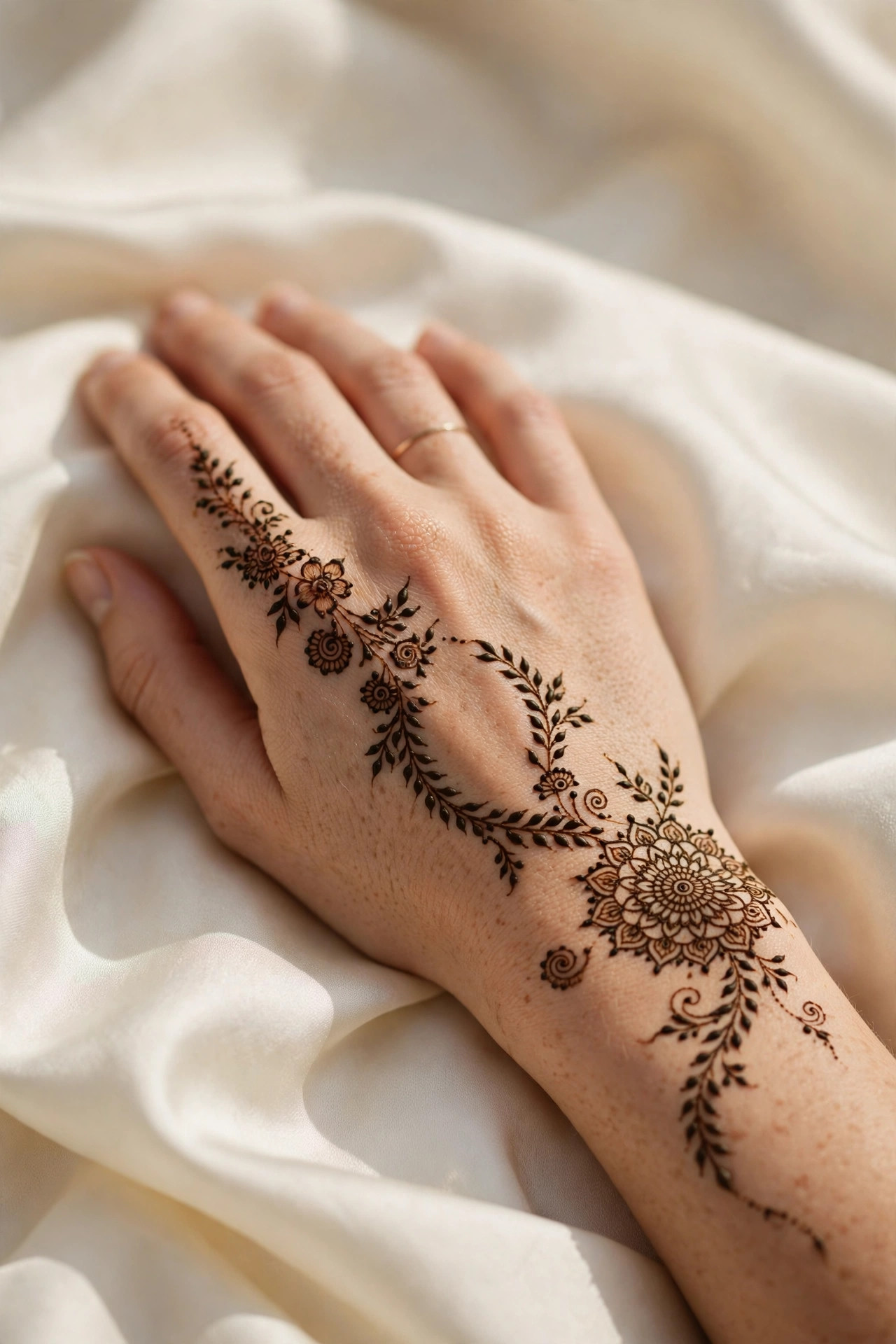
Back-hand mehndi is wedding season 2026's lighter bridal favourite: delicate floral trails, a small mandala and open space that photograph beautifully and feel easy to wear all day.
In this guide
Wedding season 2026 opens in late November, and the mehndi trend leading into it is restraint with intention. Brides still want their hands to look special, but the full-hand, fingertip-to-elbow designs that take three to five hours are no longer the only bridal choice. Back-hand mehndi has become the modern favourite: it decorates the back of the hand instead of the palm, photographs beautifully in natural light, and suits brides, bridesmaids and guests alike. The look is built from three things — a flowing floral trail, one focal motif, and open space that lets the skin itself become part of the pattern. That breathing room is the whole point: it keeps the design elegant rather than busy, and it means the stain develops evenly and fades gracefully instead of patching.
What makes a back-hand design work
Start with placement, not pattern. A back-hand design should follow the hand's own lines: a trail that starts at the wrist, sweeps across the back of the hand, and finishes in lace-like detailing on one or two fingers reads as one continuous piece rather than a collection of motifs. The focal point is usually a small mandala or a single large bloom near the centre of the hand, with finer petals, dots and vines radiating out from it. Keep at least one finger mostly bare, and leave clear skin between the trail and the wrist — that negative space is what makes the design look modern and expensive, and it is also what makes it comfortable to wear for hours of greeting guests, holding a bouquet and eating at the table. If you want a personal touch, hide one tiny initial or date inside the vines; it photographs as a sweet secret rather than a slogan.
Choosing your version, and getting the stain right
For a bride, pair the back-hand design with a matching palm tikki or a light palm mandala if you want a little more coverage for the main photographs, and plan matching feet designs with the same motifs and border for a complete look. For a guest or bridesmaid, the back-hand trail on its own is plenty — it takes far less time in the artist's chair, often under ninety minutes, and still looks intentional beside a festive outfit. Whatever version you choose, book early: wedding-season artists fill up weeks ahead, so book your artist when you book your venue. Apply one or two days before the event, keep the paste on for at least six to eight hours (overnight is ideal for brides), and avoid water for the first few hours after removing it. A light balm seal and warm hands help the colour deepen to that rich brown everyone photographs. Save this guide, show your artist the trail-and-mandala shape, and let your hands do the talking this wedding season.
What to ask your artist for
Show three things at your appointment: the trail direction you want, the size of your focal mandala, and how much open space you like. Ask for fine lines rather than thick filling, one detailed finger rather than all five, and a small personal motif tucked into the vines if you want one. Those three choices are what separate a generic design from a 2026 back-hand look — and they are exactly what your wedding photographs will thank you for.
Pin it for later or send it to a friend
Read next
 Mehndi
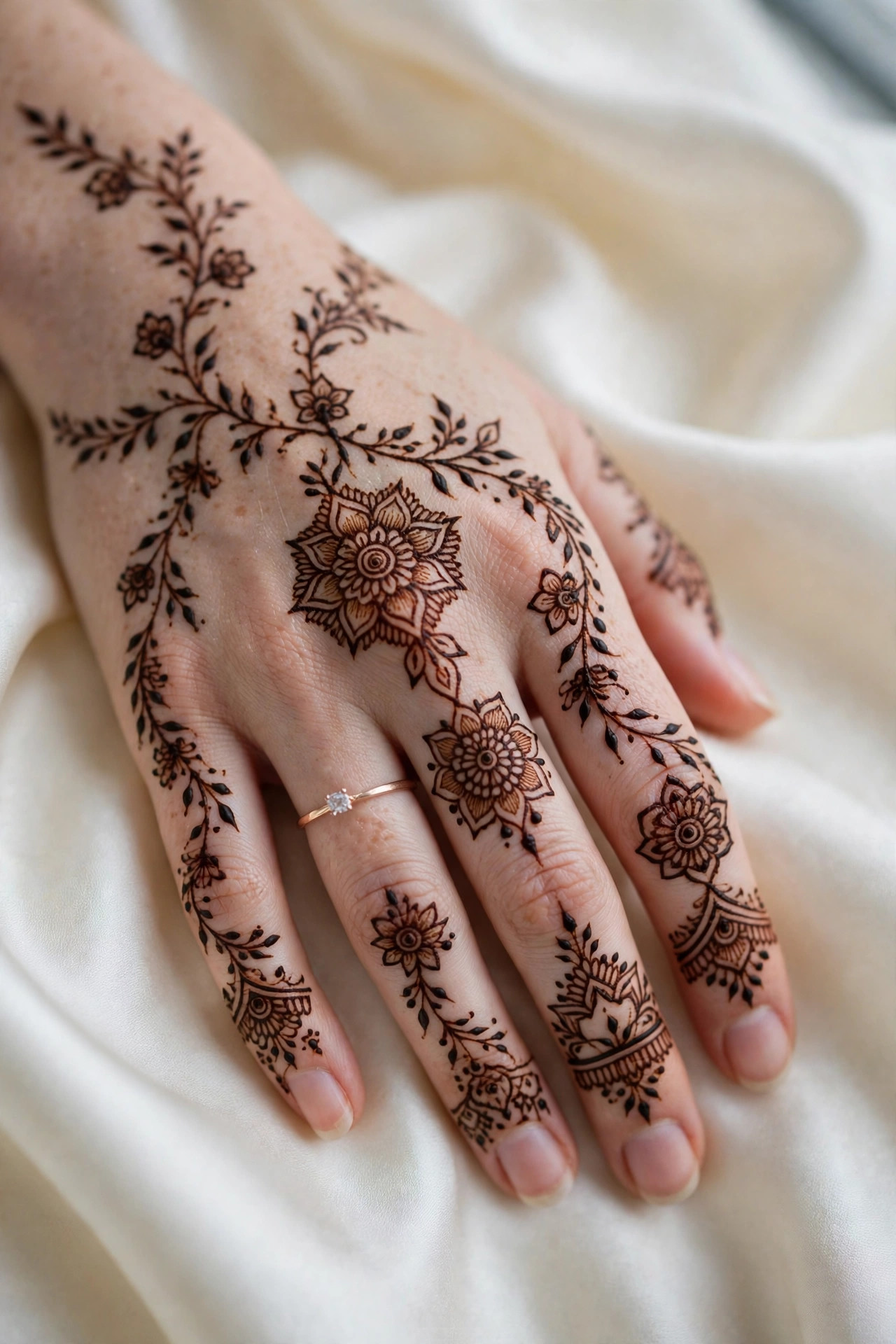
Negative-Space Mehndi: Winter 2026's Lightest, Most Photogenic Bridal Trend
Negative-space mehndi leaves the skin bare on purpose — fine-line florals, open mandalas and airy arches that photograph beautifully at winter weddings.
 Mehndi
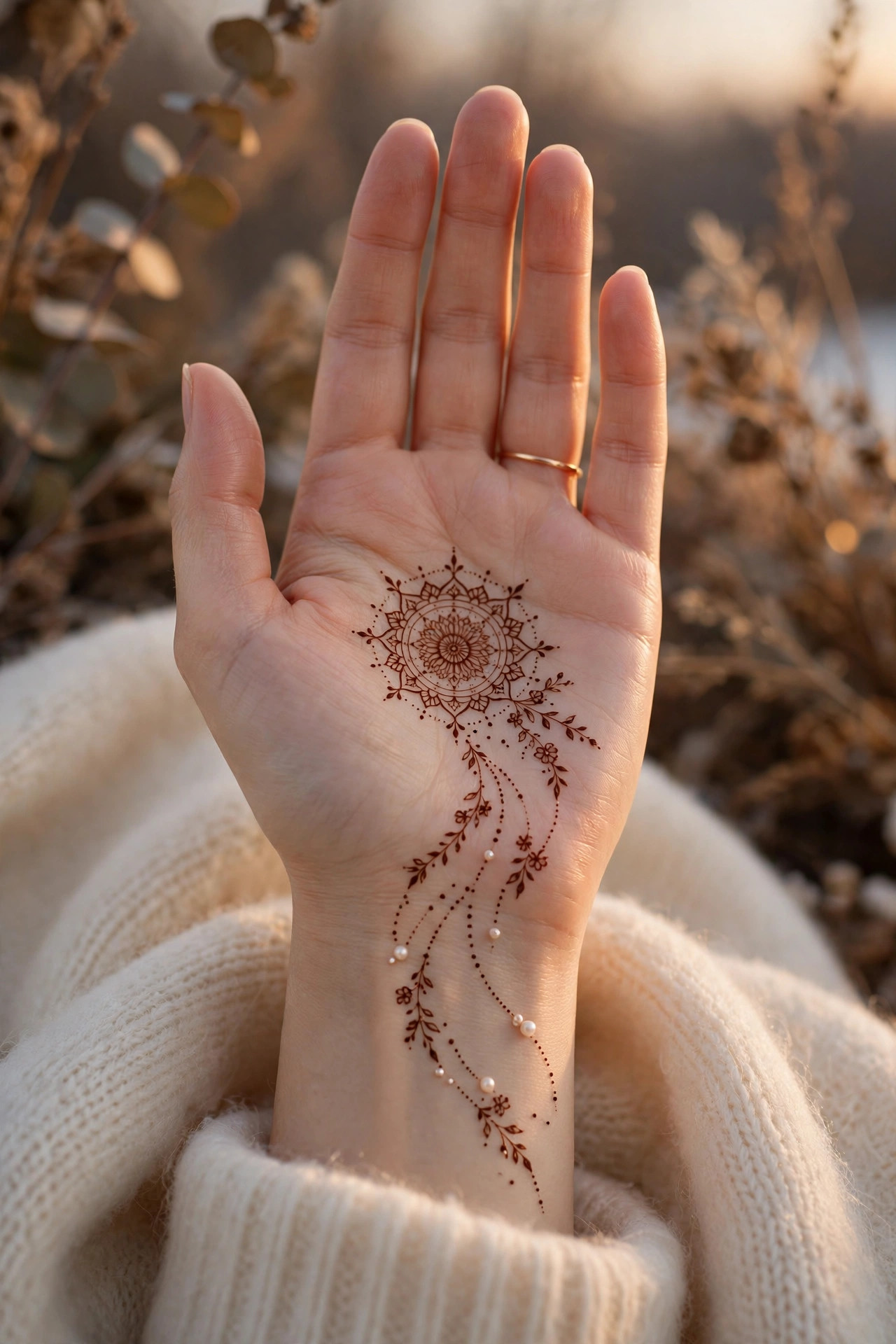
Minimalist Bridal Mehndi: Fine Lines & Open Space for Winter 2026
Winter 2026's bridal mehndi is lighter, not heavier: fine-line mandalas, deliberate negative space, and pearl accents that photograph beautifully through a long wedding day.
 Mehndi
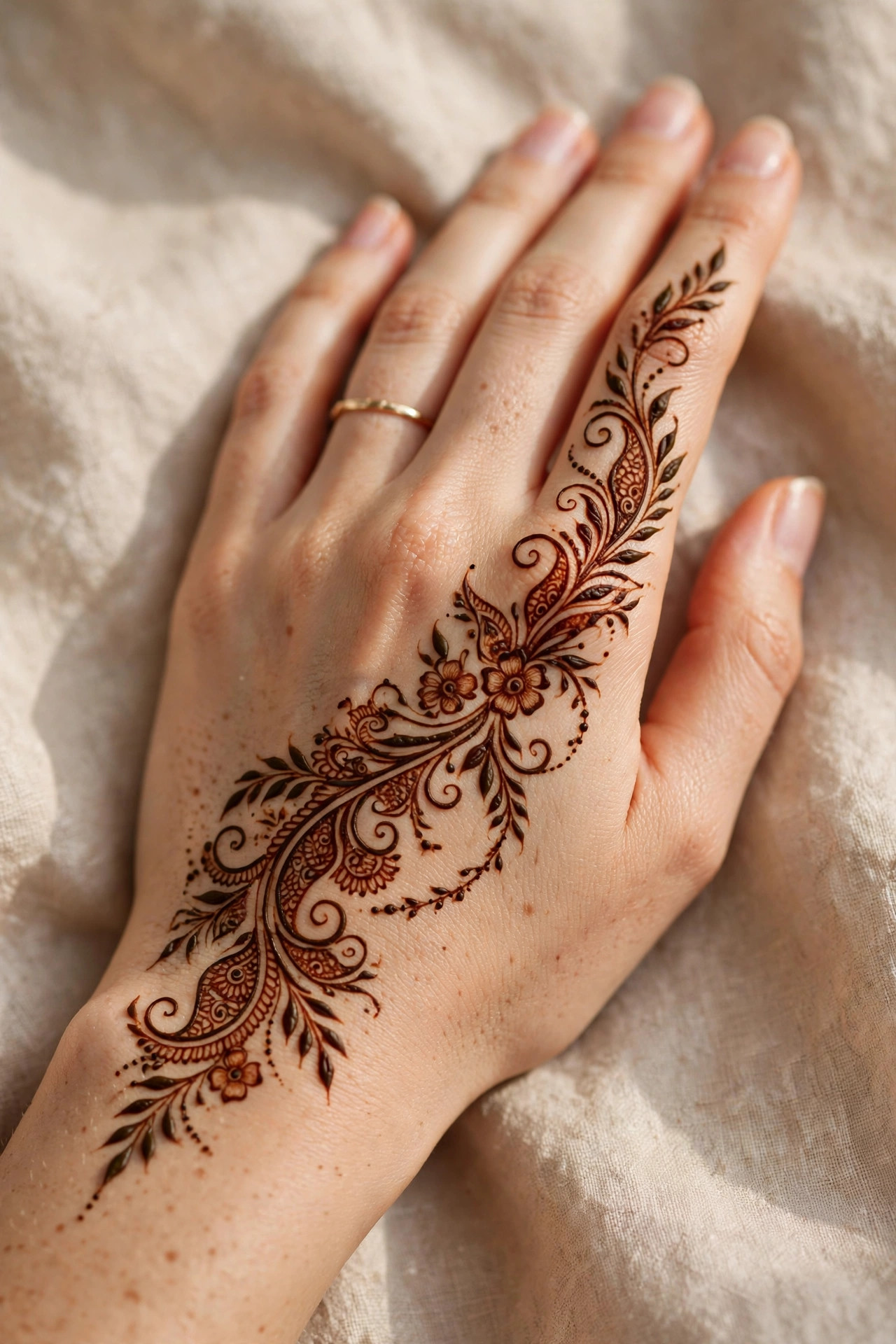
Indo-Arabic Mehndi: Flowing Florals + Open Space for Wedding Season 2026
Wedding season 2026's most saved mehndi style: Indo-Arabic florals with breathing room. How the fusion look works, and how to ask your artist for it.