Indo-Arabic Mehndi: Flowing Florals + Open Space for Wedding Season 2026
Wedding season 2026's most saved mehndi style: Indo-Arabic florals with breathing room. How the fusion look works, and how to ask your artist for it.
In this guide
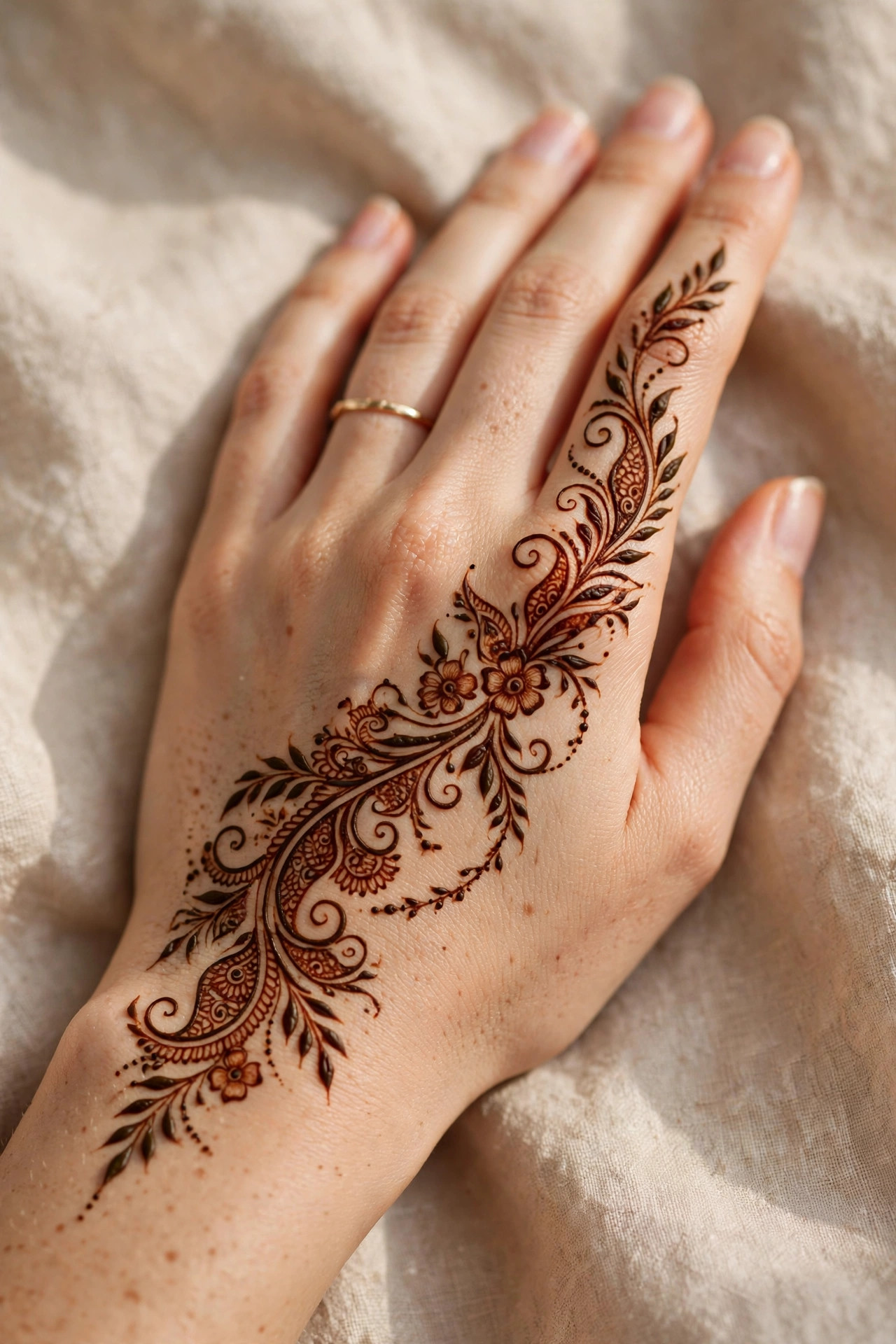
If one mehndi style sums up wedding season 2026, it is Indo-Arabic: the fine, dense motifs of Indian mehndi loosened into the flowing, diagonal trails of Arabic design. Instead of covering every inch of skin, the pattern moves — a vine climbs from the wrist, florals spill across the back of the hand, and open skin is left deliberately bare. The result photographs beautifully, feels lighter to wear for hours, and lets your rings and jewellery actually show. It is no surprise this fusion is dominating bridal saves on Pinterest and Instagram right now.
What makes it Indo-Arabic?
Traditional Indian bridal mehndi is famously full: jaal lattices, peacocks, paisleys and figurative scenes packed edge to edge. Arabic mehndi, by contrast, is airier — bold florals and leaves trailing in one direction with plenty of negative space. Indo-Arabic takes the best of both: Indian-level detail inside each flower and paisley, but arranged along Arabic-style flowing trails, usually diagonally from one side of the hand to the other. The contrast between dense motifs and bare skin is the whole point; it makes each flower read clearly instead of blurring into one dark mass.
How to ask your artist for it
Bring two or three reference photos and name the style: “Indo-Arabic, diagonal trail, with open space.” Tell your artist where you want the density — most brides concentrate detail on the back of the hand and keep the palm lighter, or vice versa — and agree on a finish time before you sit down. Fusion designs are quicker than full traditional bridal work, which makes them a kind choice for bridesmaids and guests too: a beautiful trail can be done in 30 to 45 minutes.
Getting the darkest stain
The look depends on contrast, so stain care matters. Keep the paste on as long as you can, ideally overnight, scrape rather than wash it off, and avoid water for the first 12 hours. A lemon-sugar seal while the paste dries, warmth afterwards, and regular moisturising once the colour develops will all deepen the reddish-brown tone. And book early: good mehndi artists are reserved months ahead in wedding season, especially for bridal parties.
Try it this wedding season
You do not need a wedding of your own to wear this trend — it is made for guests. Start with a single trailing vine at your next shaadi or dholki and see how many people ask where you got it done. Save this guide, show your artist the diagonal-trail idea, and let the open space do the talking.
Pin it for later or send it to a friend
Read next
 Mehndi
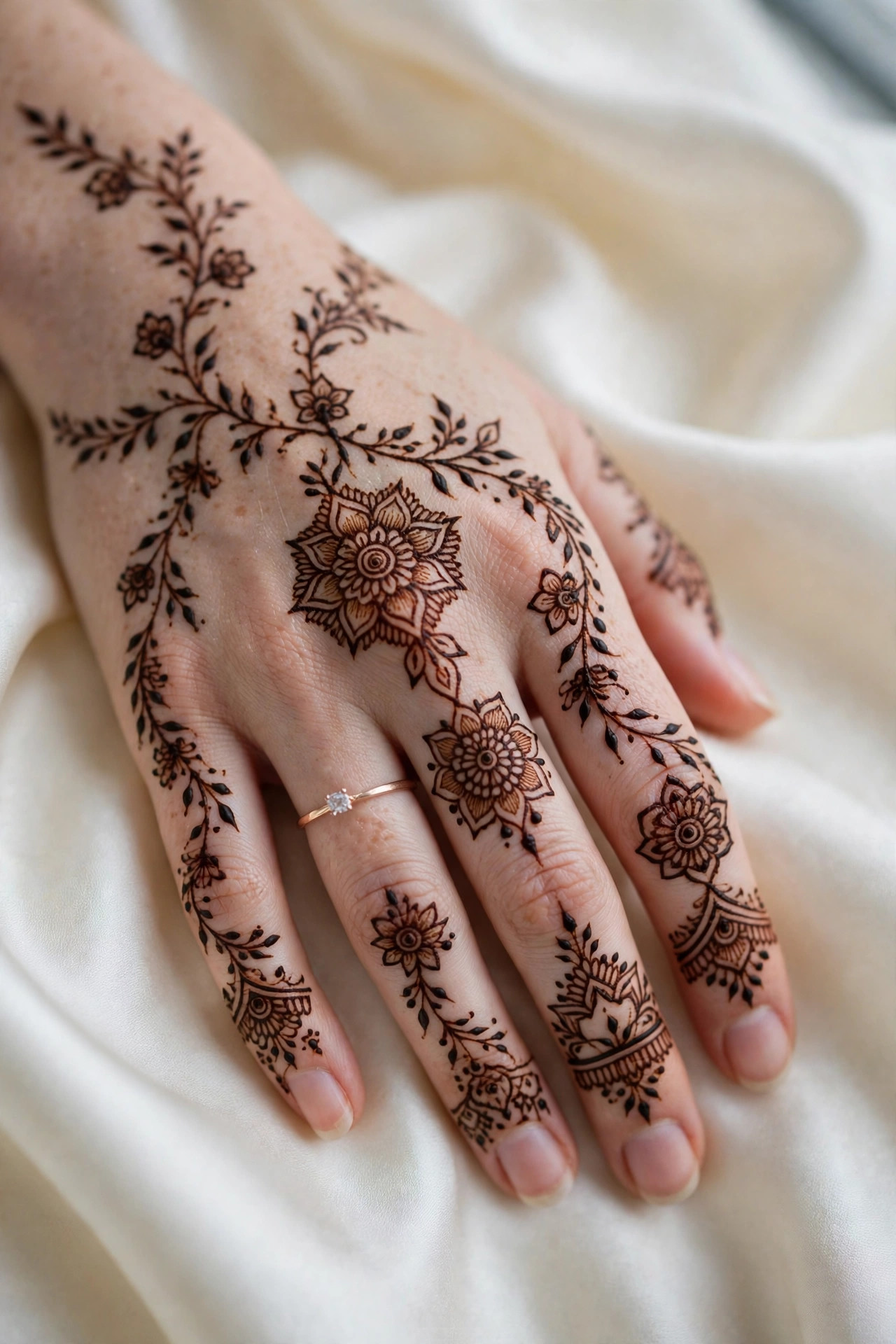
Negative-Space Mehndi: Winter 2026's Lightest, Most Photogenic Bridal Trend
Negative-space mehndi leaves the skin bare on purpose — fine-line florals, open mandalas and airy arches that photograph beautifully at winter weddings.
 Mehndi
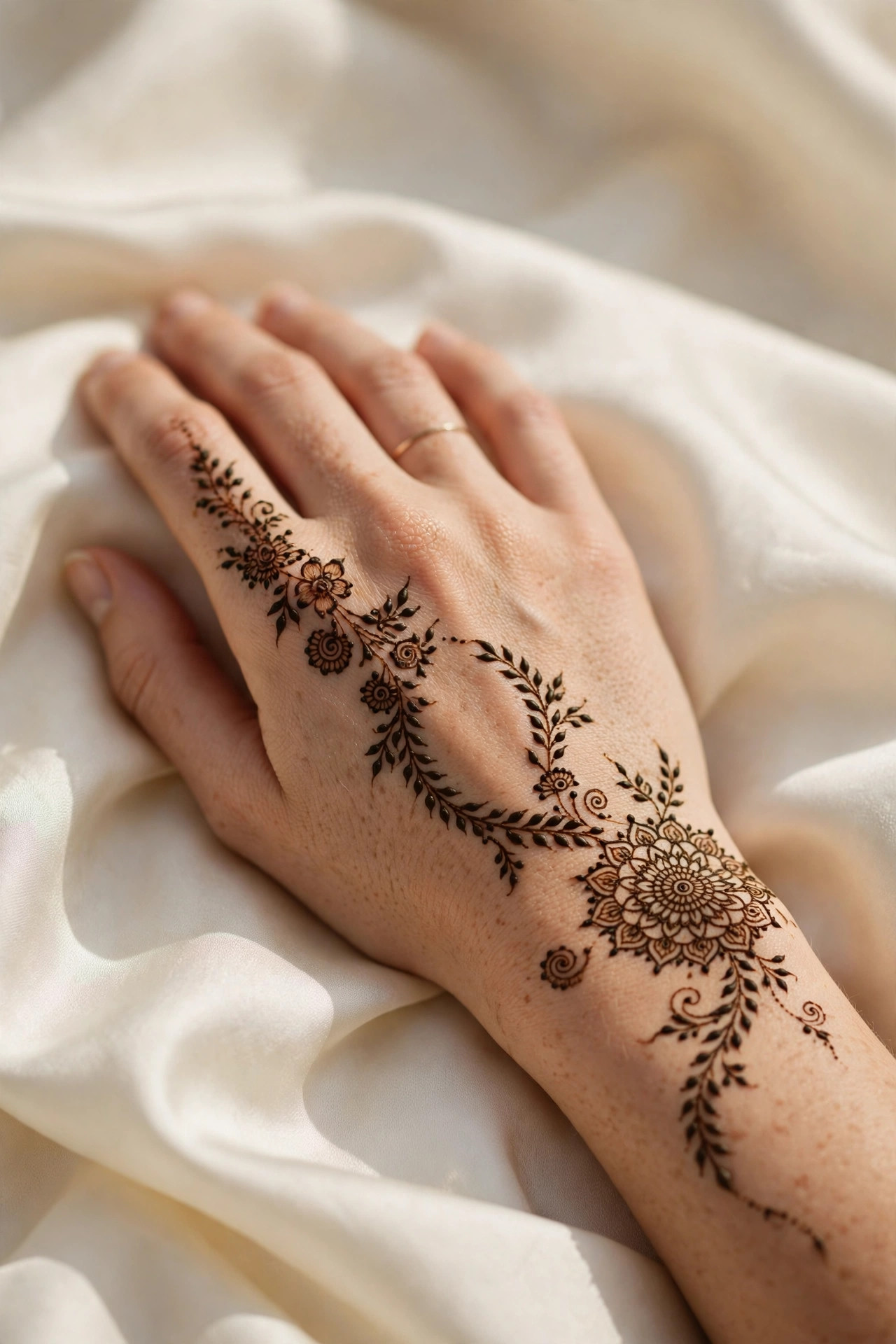
Back-Hand Mehndi for Wedding Season 2026: Light, Photogenic & Bridal-Ready
Back-hand mehndi is wedding season 2026's lighter bridal favourite: delicate floral trails, a small mandala and open space that photograph beautifully and feel easy to wear all day.
 Mehndi
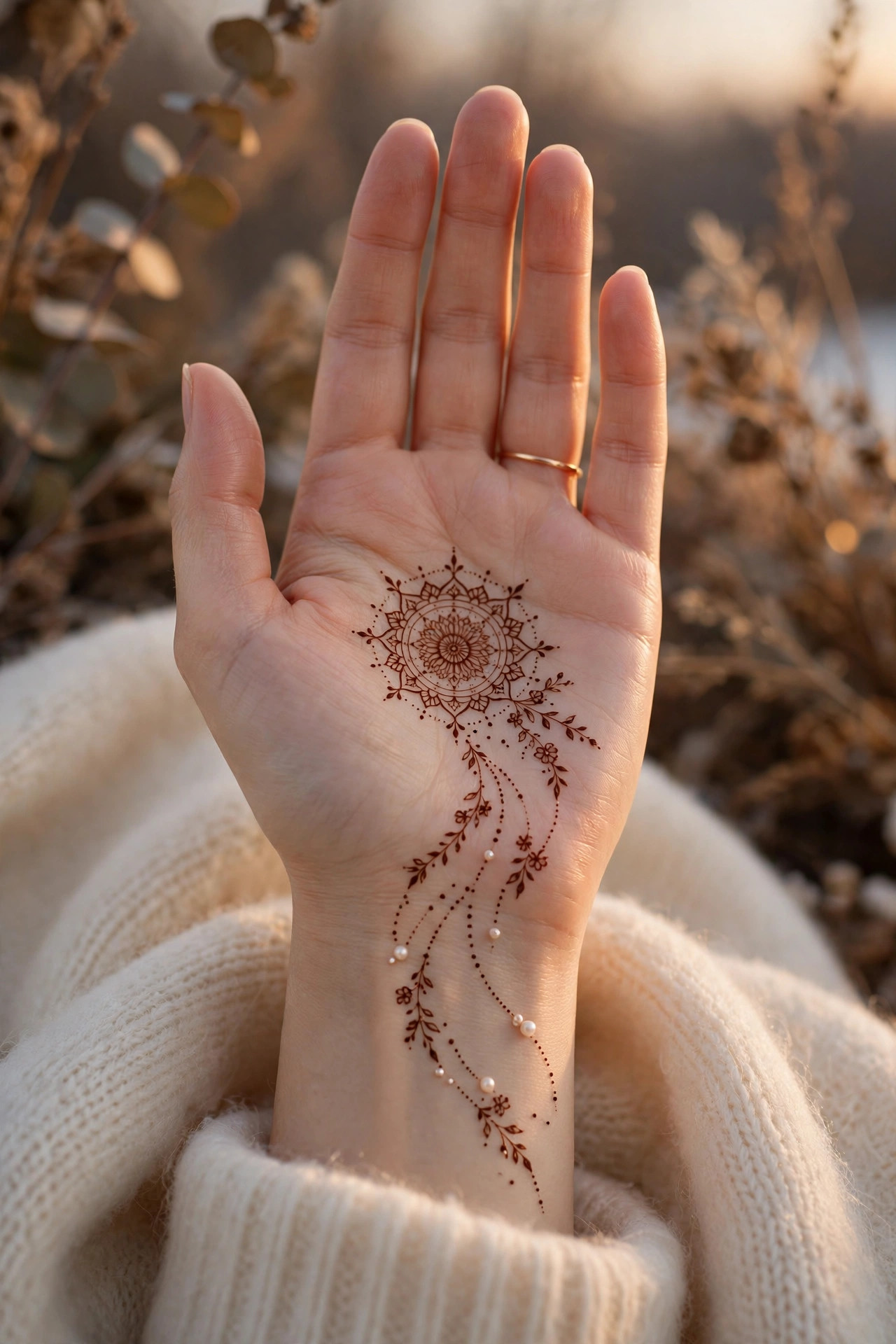
Minimalist Bridal Mehndi: Fine Lines & Open Space for Winter 2026
Winter 2026's bridal mehndi is lighter, not heavier: fine-line mandalas, deliberate negative space, and pearl accents that photograph beautifully through a long wedding day.