Negative-Space Mehndi: Winter 2026's Lightest, Most Photogenic Bridal Trend
Negative-space mehndi leaves the skin bare on purpose — fine-line florals, open mandalas and airy arches that photograph beautifully at winter weddings.
In this guide
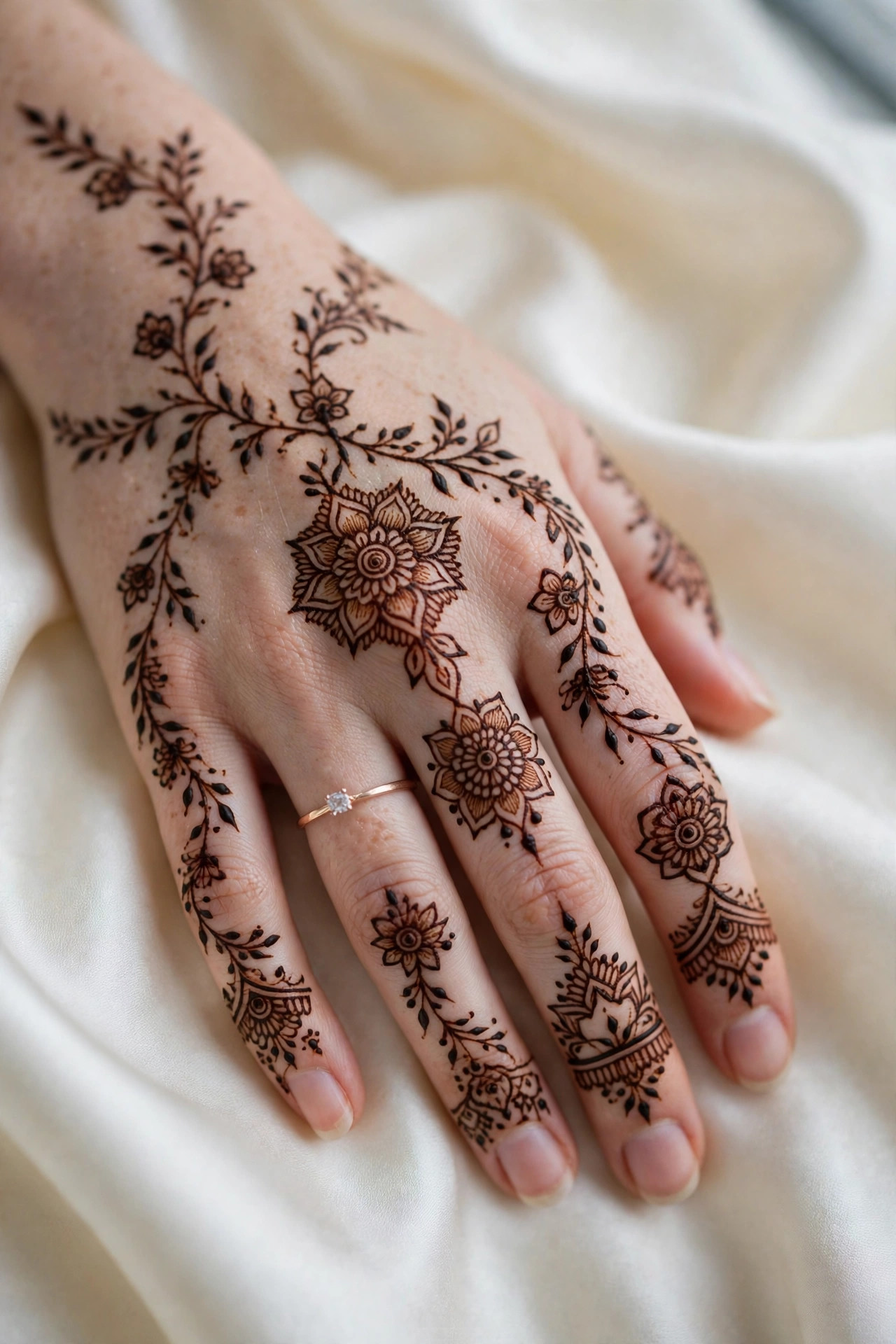
Winter brides in 2026 are choosing air over density. After years of full-hand designs that covered every inch of skin, the trend turning up on every bridal feed this wedding season is negative space — mehndi drawn with intention around the skin it leaves bare. Fine-line floral vines trail across an open palm, a mandala outlines itself in thin strokes instead of solid fill, and a jharokha arch frames the wrist like a window rather than a wall. The result feels lighter on the hand, kinder during long ceremonies, and — the reason it keeps getting saved — it photographs beautifully, because the camera reads the contrast between deep mahogany stain and untouched skin instead of one flat block of pattern.
What negative-space mehndi actually looks like
The style is easy to recognise once you know it. Look for one hero motif — a central mandala, a single arch, a bold lotus — drawn in clean, confident lines, with the space around it kept deliberately empty. Around that centre, the artist adds fine-line florals, tiny dots and hair-thin vines that fade out instead of filling in, so the design breathes. Fingers often carry just a vine or a small motif each, rather than full coverage, which is why bridesmaids love it too: it looks finished in photos but never feels heavy. It pairs naturally with this season's other big bridal ideas — Arabic open florals, Pichwai-inspired lotus bands and jharokha arches — because all of them use open space the same way, as a design element rather than a gap to be filled.
Getting the darkest stain in cold weather
Winter air is the one thing working against you: cold slows down the way henna darkens on the skin, so a winter stain can come out lighter than a summer one if you rush it. Keep your hands warm after the paste is applied, leave it on for at least six to eight hours — overnight is ideal — and seal it with a lemon-sugar dab once it dries so the paste stays in contact with the skin. Avoid water for the first twelve hours after removing the paste, and let the colour deepen naturally over the next day instead of scrubbing at it. Done this way, a negative-space design holds its contrast for days: dark, crisp lines floating on clear skin, elegant from the mehndi night right through to the reception. That is why winter brides keep choosing it — it is lighter to wear, easier to live in, and somehow more striking in every photograph.
Pin it for later or send it to a friend
Read next
 Mehndi
Back-Hand Mehndi for Wedding Season 2026: Light, Photogenic & Bridal-Ready
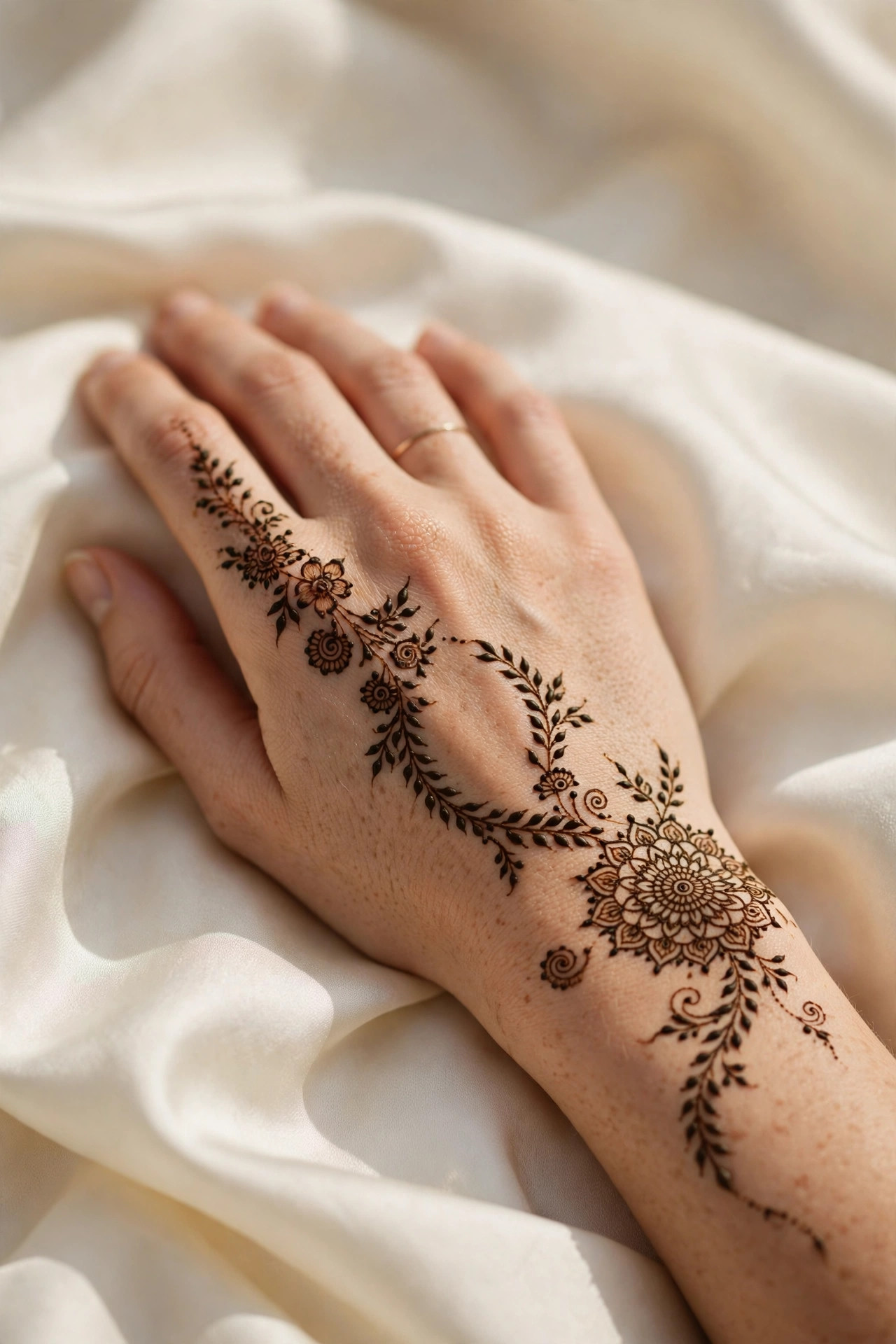
Back-hand mehndi is wedding season 2026's lighter bridal favourite: delicate floral trails, a small mandala and open space that photograph beautifully and feel easy to wear all day.
 Mehndi
Minimalist Bridal Mehndi: Fine Lines & Open Space for Winter 2026
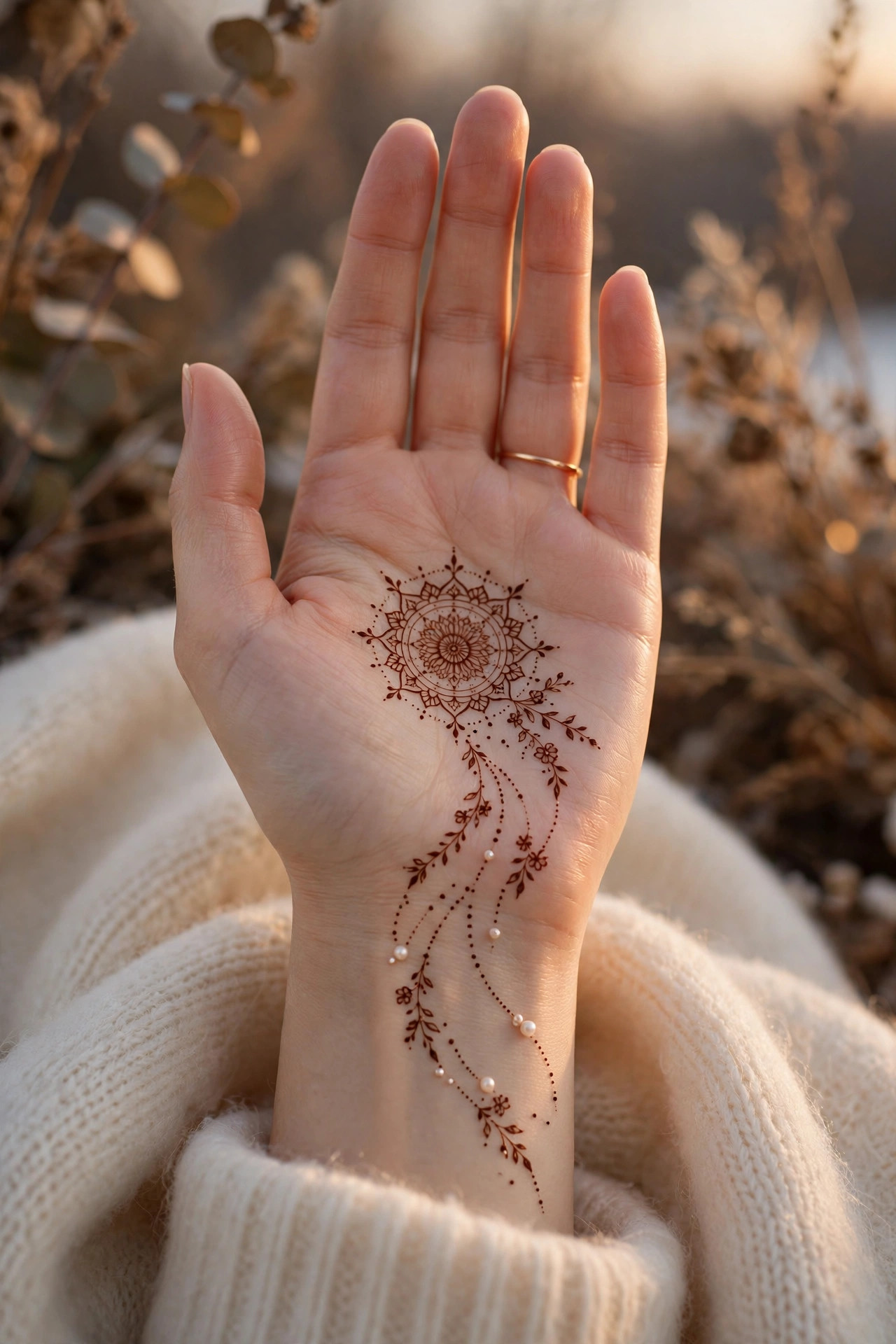
Winter 2026's bridal mehndi is lighter, not heavier: fine-line mandalas, deliberate negative space, and pearl accents that photograph beautifully through a long wedding day.
 Mehndi
Indo-Arabic Mehndi: Flowing Florals + Open Space for Wedding Season 2026
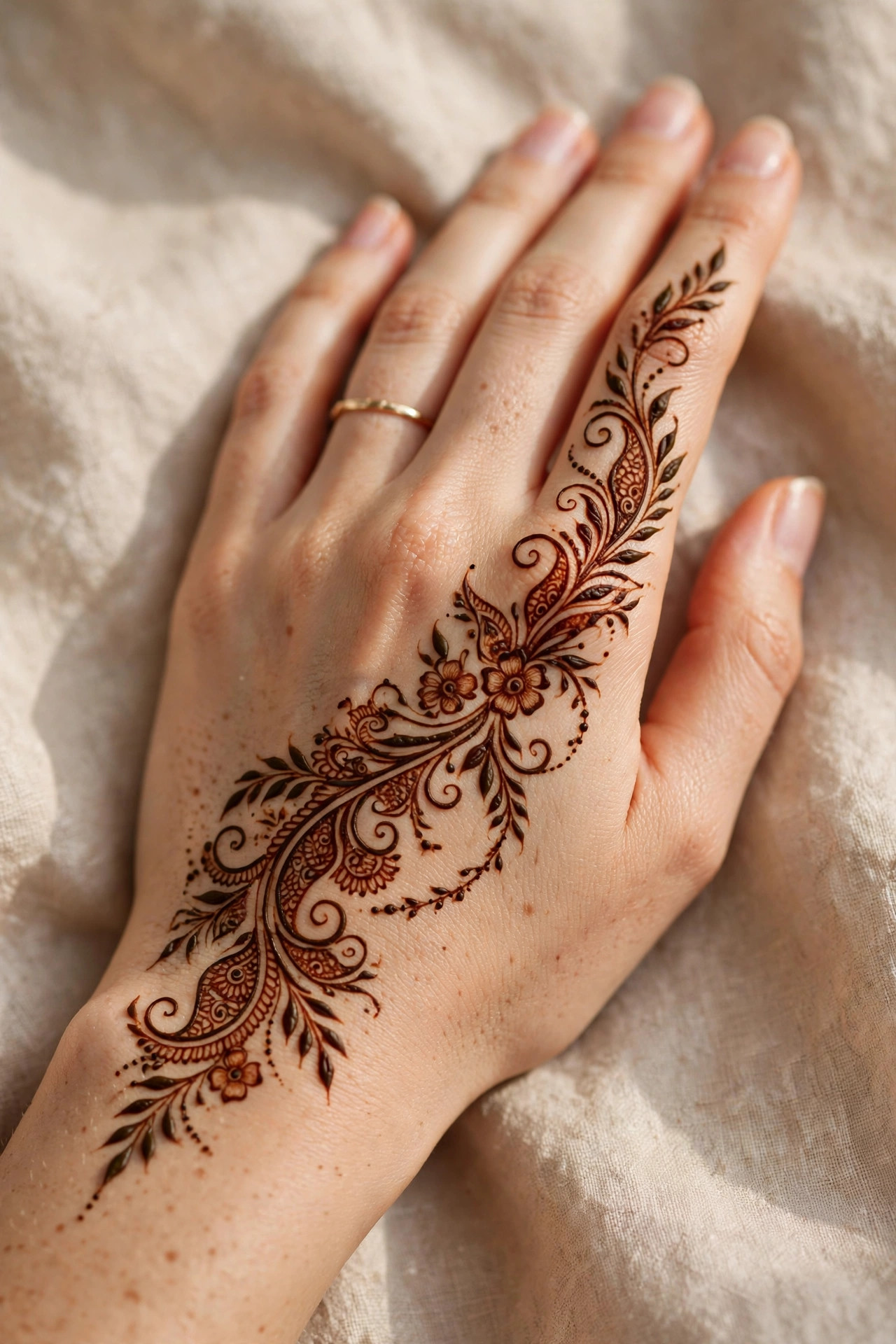
Wedding season 2026's most saved mehndi style: Indo-Arabic florals with breathing room. How the fusion look works, and how to ask your artist for it.